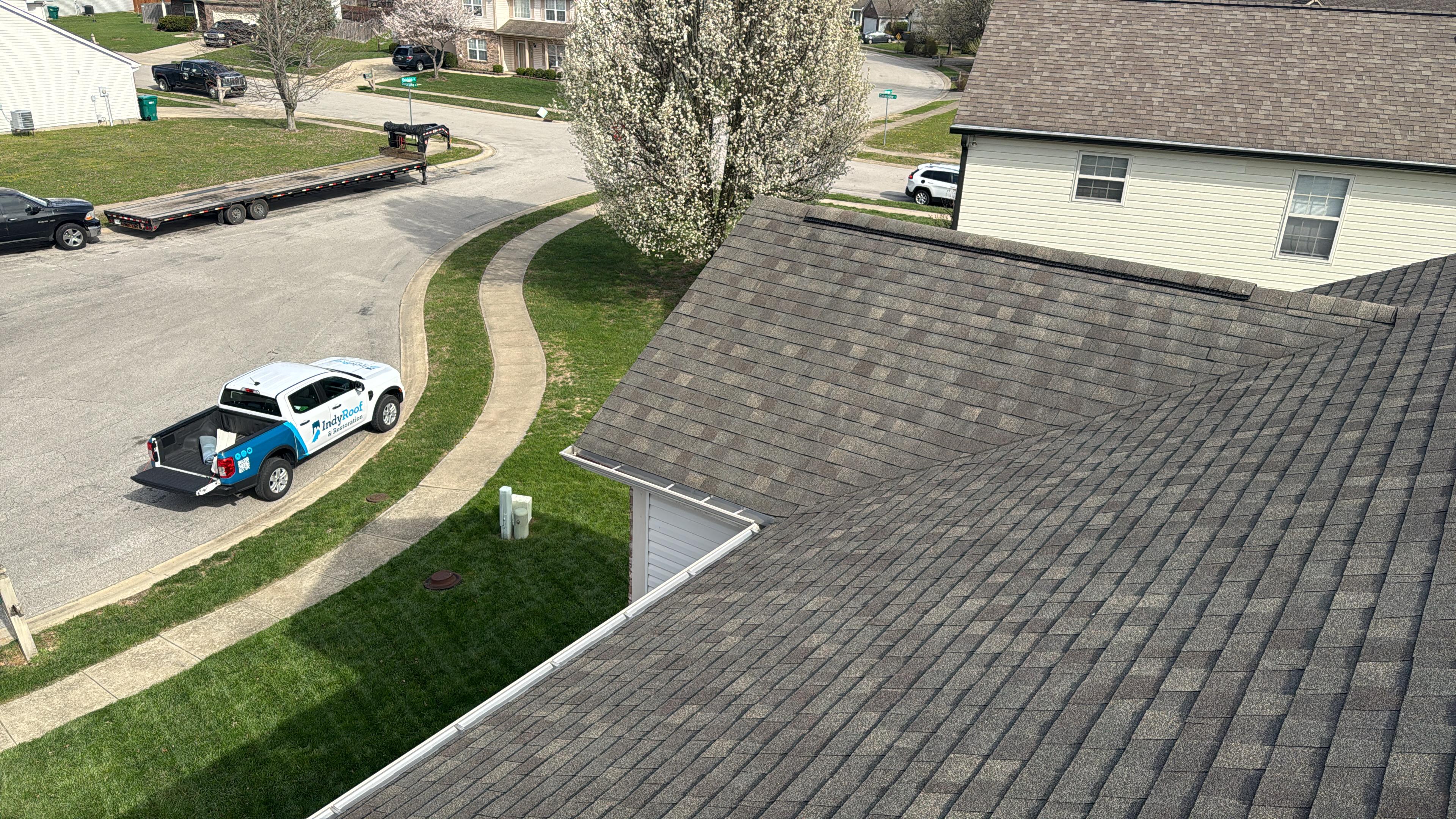
Step 1: Verify the Roof Is a Candidate for Cleaning
- Age check: shingles under 15 years old with visible granule coverage are candidates. Shingles 18+ years with bald patches are not.
- Mat check: lift a shingle tab. If the mat is brittle or cracks, stop. You need a repair estimate, not a cleaning.
- Flashing check: inspect step flashing, pipe boots, and valleys. Damaged flashing must be addressed before any water or chemical hits the roof.
- Warranty check: confirm the shingle manufacturer allows soft wash cleaning. Owens Corning and Malarkey both permit it at specified ratios.
- Granule check: scoop a handful of debris from the downspout outlet. More than a half cup of loose granules per downspout suggests the shingle is shedding protective material, and cleaning may accelerate the loss.
- Substrate check: from the attic, look for daylight at the ridge, dark streaks on the decking, or soft spots. Any of these disqualify the roof from a wet cleaning until repairs are complete.
If any item fails, schedule a free roof inspection before proceeding. Cleaning a failing roof wastes money and accelerates leaks. Springport Roofing inspectors in Springport can usually complete this verification in under 45 minutes.
Step 2: Assemble Equipment and PPE
- Pump sprayer, 2 gallon minimum, chemical resistant seals.
- Soft bristle roof brush on a 6 to 12 foot extension pole.
- Garden hose with shutoff nozzle, 50 to 100 feet depending on roof access.
- Roof harness rated to ANSI Z359, anchor strap, and 50 foot lifeline.
- Non slip rubber soled boots. No leather soles on wet shingles, ever.
- Nitrile gloves, chemical splash goggles, long sleeves, old clothes.
- Tarps or plastic sheeting for landscaping below the drip edge.
- 5 gallon bucket for mixing, clearly labeled, never reused for potable water.
- pH test strips to verify dilution ratios before application.
Step 4: Protect the Property
- Pre wet all landscaping within 10 feet of the drip edge. Saturated plants absorb far less bleach runoff.
- Cover delicate shrubs and annuals with plastic sheeting. Remove immediately after rinsing.
- Close all windows and skylights on the work slope.
- Move vehicles at least 15 feet from the eaves. Bleach spots car paint fast.
- Divert downspouts away from storm drains when possible, or notify neighbors if a shared drain is in play.
- Leash or crate pets indoors for the duration of the job and for 2 hours after final rinse.
- Post a small sign at the front walkway so delivery drivers and visitors do not walk under active drip zones.
Step 9: Install Zinc or Copper Strips
- Cut strips 2.5 to 3 inches wide in 8 foot lengths.
- Slide the top edge under the shingle course just below the ridge, leaving 1 to 2 inches exposed.
- Secure with roofing nails and dab sealant over each nail head.
- Rainwater passing over the metal releases ions that suppress regrowth on the slope below. Expect 5 to 7 years of protection before replacement.
- On complex roofs with multiple ridges, dormers, and hips, install a strip below each ridge line. A single strip only protects the slope directly beneath it.
Step 7: Remove Moss Physically
- After the dwell, use the soft brush to sweep moss downslope, in the direction the shingles lay.
- Never scrub upslope. You will lift shingle tabs and tear the adhesive strips.
- Use light pressure. Moss that resists removal needs another 10 minute dwell, not more force.
- Expect to collect a wheelbarrow or more of debris from a 2,000 square foot roof with heavy colonization.
- Bag the debris rather than sweeping it into beds. Moss spores and algae cells will re seed anything they land on.
Step 6: Apply the Solution
- Spray in even, overlapping passes along each course of shingles.
- Wet the surface uniformly until the solution beads and runs slowly. Do not flood it.
- Let the solution dwell for 15 to 20 minutes. Keep the surface damp. Reapply lightly if any section dries.
- You will notice the black streaks fade within the dwell window. Full die off of algae takes 48 to 72 hours, so the roof will continue lightening after you finish.
- Work in sections no larger than 400 square feet at a time. Larger sections dry unevenly and produce streaky results.
Step 8: Rinse
- Rinse with a standard garden hose at 40 to 60 PSI. No pressure washers.
- Work top down, matching the slope.
- Flush gutters and downspouts until the runoff is clear. Clogged gutters after a cleaning lead to ice dam problems in January, so pair this work with fall gutter and roof maintenance when possible.
- Rinse all landscaping a second time after you come off the roof.
- Check siding, window frames, and deck boards below the work zone. Any overspray should be rinsed within 2 hours to prevent lightening of stained wood.
A Final Word on Doing This Safely
Roof cleaning combines two genuine hazards, a slick wet surface at height and chemicals that can harm plants, skin, and eyes, which is why so much can go wrong when it is rushed. If you take it on yourself, never work on a wet or steep roof, protect the landscaping below, wear proper eye and skin protection, and stay off the moss rather than scrubbing it, since the granules come off with it. For anything beyond a small, low, easily reached section, the safer and usually cheaper path on a Springport roof is to hand it to a crew that does it routinely, with the right access equipment and a soft-wash approach that protects the shingles.
Step 5: Tie Off and Access the Roof
- Anchor to a structural rafter through the ridge, not to a vent or decking screw.
- Set the lifeline so you cannot reach the eave edge in a slip.
- Start at the ridge and work down. Never apply solution above yourself.
- If the pitch is 7/12 or steeper, or the roof is over 20 feet to grade, stop. This is a job for a crew with proper staging. Many Springport homes built in the last 20 years have 8/12 or 9/12 pitches that are not safe for single person DIY work.
- Check the forecast. Wind over 15 mph causes chemical drift onto siding and neighboring property. Rain within 4 hours washes the solution off before it kills the biology.
Step 10: Document and Schedule Re-Inspection
- Photograph all slopes before and after for your records and any future insurance claim documentation.
- Note the date on your maintenance calendar. Plan to re treat in 3 to 5 years depending on tree cover.
- Trim overhanging branches back 6 to 10 feet from the roof plane to reduce shade and debris.
- Schedule a professional inspection every 2 years, or after any hail or wind event above 55 mph.
- Save the mix ratio, dwell time, and weather conditions from this job. Repeating the same process next cycle produces consistent results and shortens the labor estimate.
Step 3: Mix the Cleaning Solution
- Base solution: 1 part household sodium hypochlorite (6 percent bleach) to 3 parts water.
- Add 2 to 4 ounces of surfactant (standard laundry soap works) per gallon to help the solution cling.
- Do not use pressure washer grade chemicals unless you are trained on them. Do not mix bleach with ammonia or acid cleaners.
- Target roof surface temperature: between 50 and 85 degrees Fahrenheit. Hotter than 85 and the solution flashes off before it works.
- Mix only what you will use in the next 2 hours. Sodium hypochlorite loses 20 to 30 percent of its strength per day once diluted and exposed to sunlight.
- If hard water is an issue in Springport, use distilled water for the mix to prevent mineral streaking on the shingle surface.